
Renting a car is a popular choice for many people, whether for leisure travel, business trips, or even as a temporary replacement while their personal vehicle is being repaired. However, one important aspect that should never be overlooked is safety. Understanding safety standards and vehicle condition inspections for rental cars is essential to ensuring that every journey is smooth, safe, and worry-free.
As a customer, being aware of these details will help you choose and use a rental vehicle with confidence while protecting both your life and property, as well as those of your fellow passengers. But how can you tell whether the rental car you are about to use meets the required standards and is genuinely roadworthy? Are you ready to explore this topic in greater detail with us?
Why Are Safety Standards and Vehicle Condition Inspections for Rental Cars Important?
The importance of safety standards and vehicle condition inspections for rental cars goes beyond simply preventing accidents. It also involves the responsibilities of rental operators and the rights of customers. Ensuring that a rental vehicle is in excellent condition and complies with legally required standards provides an essential level of assurance that the vehicle is genuinely ready for use on public roads.
For rental operators, regularly maintaining vehicles in accordance with safety standards and vehicle condition inspection requirements for rental cars not only helps build business credibility and a positive brand image but also reduces the risk of accidents that could lead to lawsuits or serious financial losses. For renters, conducting a thorough vehicle inspection before accepting the car is like having an additional layer of protection. It provides peace of mind throughout the journey and helps prevent unexpected problems, such as a vehicle breakdown along the way or other unforeseen issues that could easily disrupt travel plans.
The Complete Guide to Inspecting a Rental Car Before Pickup
To ensure maximum confidence when traveling in a rental car, conducting a thorough vehicle inspection before accepting the vehicle is absolutely essential. Even if the rental company has maintained the car properly, performing your own inspection provides an additional confirmation that the vehicle is ready for use and helps prevent potential problems in the future. Here is a checklist of the key items you should inspect:
1. Check Important Documents
- Rental Agreement Carefully review all the details, including the rental period, vehicle type, rental price, insurance coverage, and other terms and conditions, such as the fuel policy, vehicle return requirements, and penalties for any damage.
- Insurance Policy Make sure you understand the coverage provided by the car insurance included with the rental vehicle, including the initial amount you are responsible for paying in the event of a claim (deductible). This will help you prepare for unexpected situations.
- Driver’s License and National ID Card Ensure that your personal identification documents are valid and will remain valid throughout the entire rental period.
2. Inspect the Exterior Condition of the Vehicle
- Scratches and Dents Walk around the entire vehicle and inspect it carefully. Take photos or videos as evidence of every existing area of damage, no matter how minor it may seem, to avoid potential disputes when returning the vehicle.
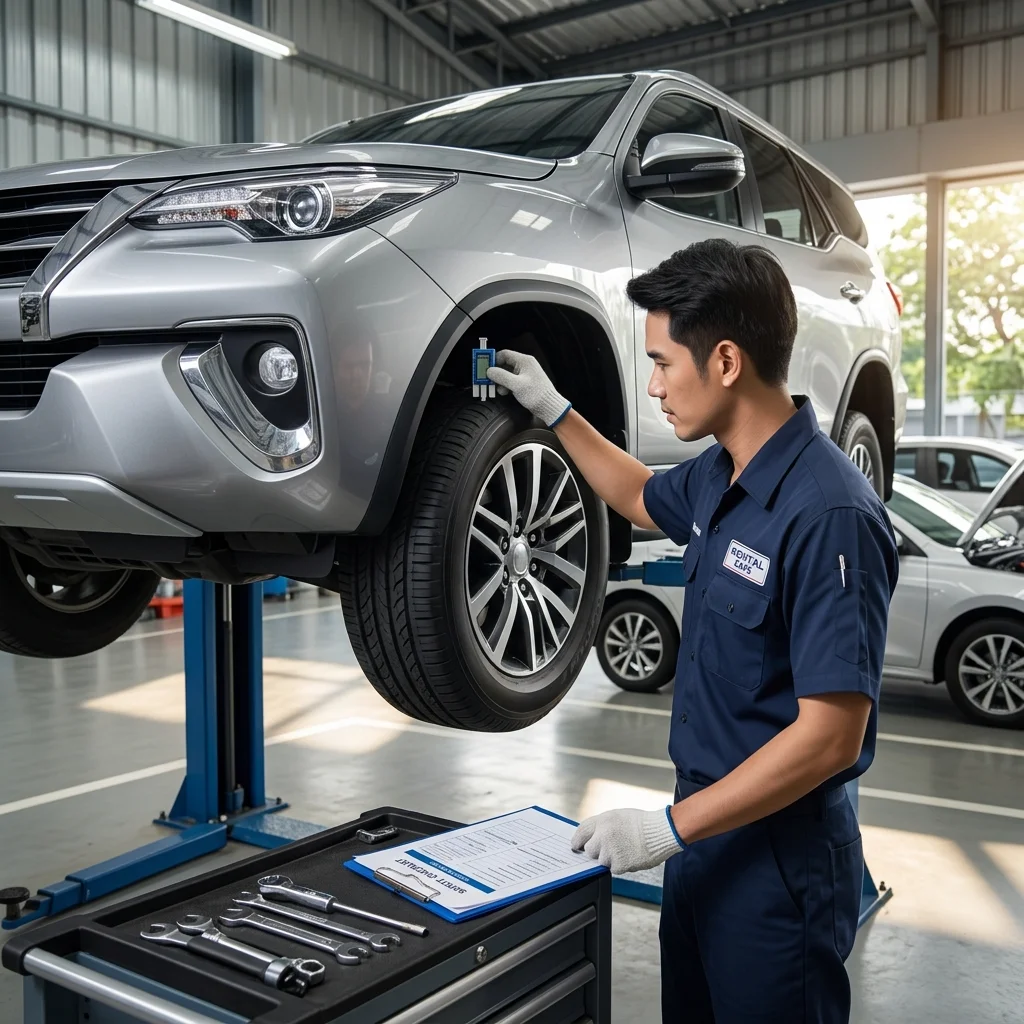
- Car Tires Check the condition of all four tires, as well as the spare tire, if one is provided. Make sure the tire tread depth is sufficient, there are no cuts or unusual bulges, and the tire pressure is at an appropriate level.
- Lights and Signal Indicators Test the headlights, taillights, turn signals, brake lights, and fog lights to ensure that all lights are functioning properly.
- Windows and Windshield Wipers Inspect all windows for cracks or damage. Also, test the windshield wipers to make sure they are working properly.
3. Inspect the Interior and Equipment
- Braking System Gently press the brake pedal to check its responsiveness and make sure the brake fluid level is within the normal range.
- Seat Belts Check the seat belts in every seating position to ensure they can be fastened and released normally.
- Fuel Level Check the fuel gauge on the dashboard and record the current fuel level. This will help you return the vehicle with the correct amount of fuel as required by the rental agreement.
- Emergency Equipment Make sure the vehicle is equipped with essential emergency tools, including a jack, wrench, screwdriver, and basic first-aid kit, and that they are all in usable condition.
- Air Conditioning and Electrical Systems Test the air conditioning, radio, USB ports, and navigation system (GPS), if available, to ensure that everything is functioning normally.
4. Take a Test Drive for Added Confidence
- Steering Control Take a short test drive to assess the steering response. Make sure the steering feels normal, without unusual vibrations or the vehicle pulling to either side.
- Unusual Noises Listen for any unusual sounds that may come from the engine, suspension system, or braking system while driving.
- Transmission and Suspension Test the gear changes to ensure they are smooth. Also, pay attention to any unusual impacts or noises from the suspension when driving over slopes, speed bumps, or uneven road surfaces.
Additional Factors to Consider Before Renting a Car
In addition to thoroughly checking the safety standards and vehicle condition of a rental car, there are several other important factors to consider to ensure you have the best possible car rental experience.
- Choose a Reputable Rental Company Select a rental operator with a good reputation, positive customer reviews, and clearly established service standards. These companies are generally more likely to maintain their vehicles properly and follow standardized inspection procedures.
- Read Reviews from Actual Customers Reading feedback from other customers will help you gain a clearer understanding of each company’s vehicle quality and service standards.
- Understand the Fuel Policy Most car rental companies have different fuel policies. For example, some require you to return the vehicle with a full tank if it was provided with a full tank, while others allow you to pay for the fuel you use, sometimes with an additional service charge. Understanding the policy in advance can help you avoid unnecessary expenses.
- Ask About Emergency Assistance Check the emergency contact number for situations such as vehicle breakdowns, flat tires, or accidents. Having access to assistance when needed will give you greater peace of mind throughout your journey.
- Consider Additional Insurance Coverage Even if basic insurance is already included, purchasing additional coverage, such as excess protection or passenger accident insurance, may be a good option if you want more comprehensive protection.
Conclusion: Enjoy a Safe and Worry-Free Journey
Paying attention to safety standards and vehicle condition inspections for rental cars is something you should never overlook. These are the essential foundations of a safe and enjoyable journey, giving you greater confidence and peace of mind every time you travel. From checking important documents and inspecting the vehicle’s exterior and interior to taking a test drive, every step plays an important role in reducing potential risks.
Being a careful renter who pays attention to these details will help you get the best possible experience from your car rental service. Whether your destination is near or far, the best preparation always starts with choosing a reputable rental company and thoroughly inspecting a vehicle that meets the required safety standards. So, how will you choose the safest rental car for your next journey?